
Mould and musty smells in Dubai homes: the October fix
Where mould hides, how to tell damp from a leak, and when to call us.
In the middle of October the weather office warned of moist air rolling in from the Arabian Sea and fog on Dubai mornings, while days still reached 38°C. Humidity in the city has been swinging between 50 and 90 per cent. If your home suddenly smells a little musty, or you have spotted grey dots on the bathroom ceiling, you are not imagining it. October is when damp shows itself.
The good news: most mould in Dubai homes comes from a few simple causes, and most of them are cheap to fix if you catch them early.
Why October brings mould into Dubai homes
All summer your A/C runs day and night. It cools the air and also pulls water out of it, so the air indoors stays fairly dry even when it is very humid outside.
In October that changes. Evenings feel nicer, so people switch the A/C off for a few hours or open the windows. Warm, wet air from outside comes in and touches surfaces that are still cool: a window, a wall behind the wardrobe, the bathroom ceiling, the metal grille of an A/C vent. When warm wet air touches something cold, the water in the air turns into tiny drops. That is condensation, the same thing you see on a cold glass of water.
Mould needs only three things: water, something to grow on (paint, grout, fabric, dust) and a few quiet days. A wall that stays a little wet every night gives it all three.
Five places mould hides in a Dubai home
1. A/C vents and ducts. If you smell something musty the moment the A/C starts, the smell is often coming from inside the unit or the air ducts (the hidden channels that carry cool air to each room), where dust and water sat all summer. Black dots around the vent grille are a clear sign. Our A/C after summer guide explains the full service.
2. Bathroom silicone, grout and ceiling. Bathrooms get the most steam. The white rubbery line around your shower tray and basin (the silicone seal) turns black first. If the black is inside the silicone, cleaning will not remove it; the line needs cutting out and redoing.
3. Behind wardrobes and beds on outside walls. Furniture pushed tight against an outside wall stops air moving. The wall stays cool, water settles on it, and mould grows where nobody looks. Pull the wardrobe out a little and check.
4. Window frames, sills and curtains. Morning fog means wet glass. Water runs down to the frame and soaks the bottom of the curtains. Look for dark spots in the corners of the frame.
5. Under the kitchen sink and behind the washing machine. A slow drip from a pipe joint can wet the cabinet floor for weeks before you see it. A soft or swollen cabinet base is the warning sign.
Is it just damp, or a hidden leak?
This matters, because the fix is completely different. Damp from the air is solved with airflow and drying. A leak needs a plumber.
Try the foil test. Tape a square of kitchen foil, about the size of your hand, tightly onto the damp patch, sealing all four edges. Leave it for one to two days, then look:
- Water on the room side of the foil: the moisture is coming from the air. It is condensation.
- Water under the foil, on the wall side: the moisture is coming from inside the wall. That can be a pipe, a neighbour's bathroom, or rain getting in.
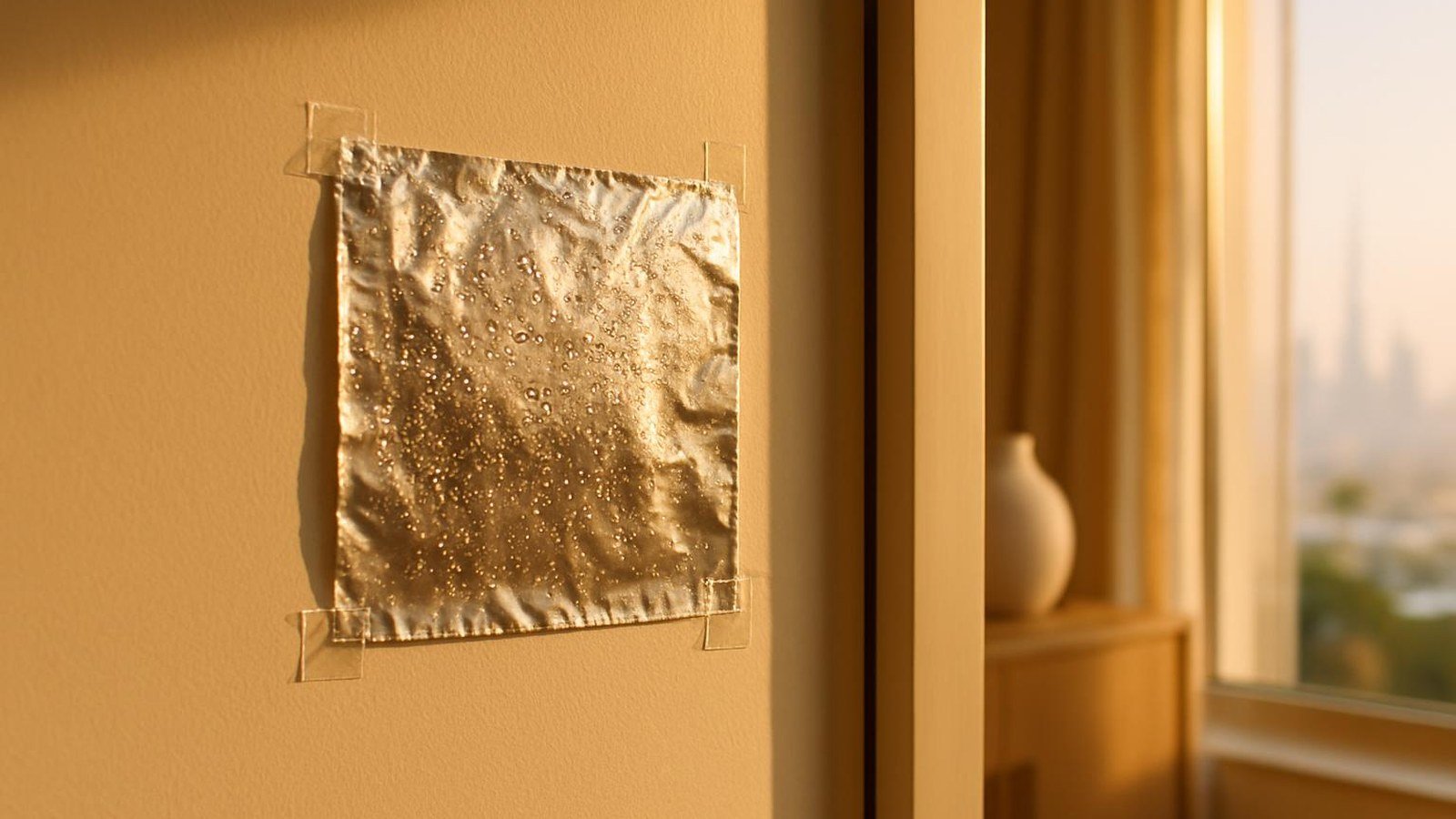
Other clues that point to a leak: the patch keeps growing, it has a brown ring around it, or it sits under a bathroom or kitchen on the floor above. If any of these fit, read our plumbing guide and get it checked before it reaches the ceiling below.
What you can do
You do not need special products to stop most condensation mould. Start here:
Keep indoor humidity under 60 per cent. The US Environmental Protection Agency advises keeping indoor humidity below 60 per cent, ideally between 30 and 50 per cent. A small humidity meter from any hardware shop tells you where you are. If your A/C remote has a Dry mode (often a water drop symbol), use it on humid evenings instead of switching the A/C off.
Run the bathroom fan after every shower. Keep it on until the mirror is clear, and leave the door open afterwards. If your fan is weak or noisy, it may need cleaning or replacing.
Dry things fast. The same advice says wet areas should be dried within 24 to 48 hours. Wipe window glass on foggy mornings, hang towels to dry outside the bathroom, and do not leave wet laundry in the machine.
Give walls some air. Move wardrobes and beds a hand's width away from outside walls.
Do not paint over it. New paint over a mould patch looks fine for a few weeks, then the spots come back through. The cause has to be fixed and the wall cleaned and dried first.
When to call a professional
Call us when the smell is coming from the A/C, when the foil test points to a leak, when silicone has gone black, or when the same patch keeps coming back after you have cleaned it. These are the jobs we do every day:
- A/C cleaning and duct cleaning, so the units stop blowing a musty smell around the home.
- Finding and fixing leaks in pipes, drains and wet areas.
- Cutting out and redoing black silicone around showers, baths, basins and kitchen worktops.
- Repainting the wall once it is clean and dry.
What it costs (2026 prices)
- A/C duct cleaning for a 2 bedroom apartment: AED 900 with Mostreno.
- Repainting walls: AED 20 per square metre of wall with Mostreno.
- A good waterproof kitchen and bath sealant costs about AED 59 a tube in Dubai shops. Parts are charged at the shop price, with the receipt.
The first visit is free and there is no obligation to go ahead. Every repair comes with a 30 day guarantee on repairs, and on WhatsApp we reply the same day. For a quick number before anyone visits, use our quick estimate.
If you rent, take photos of the patch and send them to your landlord or building management early. Clear photos with dates help everyone find the cause faster.
When the bathroom needs more than a fix
Sometimes the mould is a sign of a bigger problem: grout that has cracked all over, tiles that sound hollow when you tap them, or a shower that has leaked into the wall for years. Resealing will not hold for long then. In that case, see our bathroom renovation guide or try new tiles, fittings and a better fan in the bathroom design tool, with real products at real prices. Our interior painting guide explains which paints suit wet rooms.
Smell it, see it, or not sure? Send a photo on WhatsApp to +971 58 198 4007 and we reply the same day, or get a quick estimate. See our payments and guarantee on our How we work page.
Frequently asked questions
Why does my Dubai apartment smell musty in October?
Humid air comes in when the A/C runs less or the windows are open, and it settles as water on cool surfaces and inside A/C units. A musty smell the moment the A/C starts often means the unit or its air ducts need cleaning.
Is black mould on shower silicone a problem to leave?
It will not go away by itself and it spreads into the joint, so it is best dealt with early. If the black is inside the silicone, the silicone has to be cut out and redone. Anyone with health worries should ask their doctor.
How do I know if a damp wall is a leak?
Try the foil test: tape a square of kitchen foil tightly to the patch for one to two days. Water under the foil means moisture is coming from inside the wall, which points to a leak. Water on top means condensation from the air.
What humidity should I keep at home in Dubai?
The US Environmental Protection Agency advises below 60 per cent, ideally 30 to 50 per cent. A cheap humidity meter shows your level, and the Dry mode on many A/C units helps on humid evenings.
Can I just paint over mould?
No. The spots come back through new paint. Fix the cause, clean and dry the wall, then repaint.
How much does A/C duct cleaning cost with Mostreno?
AED 900 for a 2 bedroom apartment (2026 price). Villas and bigger homes are priced after the free first visit.